
Questão FC489601
The future will be rich with sensors capable of collecting vast amounts of information. The Internet will be almost fused with the physical world as the Internet of Things (IoT) be
Interpretação de Textos (Understanding)
FGV · 2018
TEXT II
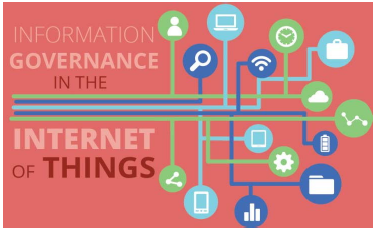
(Source:http://www.revasolutions.com/internet-
of-things-newchallenges- and-practices-for-information-governance/. Retrieved on January 26th, 2018)
Governance Challenges for the Internet of Things Virgilio A.F. Almeida -Federal University of Minas Gerais, Brazil Danilo Doneda - Rio de Janeiro State University Marília Monteiro - Public Law Institute of Brasília Published by the IEEE Computer Society © 2015
The future will be rich with sensors capable of collecting vast amounts of information. The Internet will be almost fused with the physical world as the Internet of Things (IoT) becomes a reality. Although it’s just beginning, experts estimate that by the end of 2015 there will be around 25 billion “things” connected to the global Internet. By 2025, the estimated number of connected devices should reach 100 billion. These estimates include smartphones, vehicles, appliances, and industrial equipment. Privacy, security, and safety fears grow as the IoT creates conditions for increasing surveillance by governments and corporations. So the question is: Will the IoT be good for the many, or the mighty few?
While technological aspects of the IoT have been extensively published in the technical literature, few studies have addressed the IoT’s social and political impacts. Two studies have shed light on challenges for the future with the IoT. In 2013, the European Commission (EC.) published a study focusing on relevant aspects for possible IoT governance regimes. The EC report identified many challenges for IoT governance — namely privacy, security, ethics, and competition. In 2015, the US Federal Trade Commission (FTC.) published the FTC Staff Report The Internet of Things: Privacy and Security in a Connected World. Although the report emphasizes the various benefits that the IoT will bring to consumers and citizens, it acknowledges that there are many risks associated with deploying IoT-based applications, especially in the realm of privacy and security.
[…]
The nature of privacy and security problems frequently associated with the IoT indicates that further research, analysis, and discussion are needed to identify possible solutions. First, the introduction of security and privacy elements in the very design of sensors, implementing Privacy by Design, must be taken into account for outcomes such as the homologation process of sensors by competent authorities. Even if the privacy governance of IoT can oversee the control centers for collected data, we must develop concrete means to set limits on the amount or nature of the personal data collected.
Other critical issues regard notification and consent. If, from one side, it’s true that several sensors are already collecting as muchpersonal data as possible, something must be done to increase citizens’ awareness of these data collection processes. Citizens must have means to take measures to protect their rights whenever necessary. If future scenarios indicate the inadequacy of a mere notice-and-consent approach, alternatives must be presented so that the individual’s autonomy isn’t eroded.
As with other technologies that aim to change human life, the IoT must be in all respects designed with people as its central focus. Privacy and ethics aren’t natural aspects to be considered in technology’s agenda. However, these features are essential to build the necessary trust in an IoT ecosystem, making it compatible with human rights and ensuring that it’s drafted at the measure, and not at the expense, of people.
(Source: https://cyber.harvard.edu/~valmeida/pdf/IoT-governance.pdf Retrieved on January 23rd, 2018)
The first paragraph opens and ends, in this order, with
- a query and a solution.
- a forecast and a doubt.
- a prediction and a realization.
- a contradiction and a problem.
- an objection and an explanation.
Mostrar resposta e comentário
Gabarito
B
Comentário do professor
Alternativa B: o primeiro parágrafo abre com uma previsão e termina com uma dúvida.
A abertura apresenta afirmação prognóstica: "The future will be rich with sensors..." O uso do verbo will indica projeção para o futuro, ou seja, uma previsão sobre a difusão de sensores e dispositivos.
O encerramento é uma pergunta: "Will the IoT be good for the many, or the mighty few?" A interrogação manifesta incerteza e preocupação sobre quem se beneficiará da tecnologia, caracterizando claramente uma dúvida.
Assim, o parágrafo juxtapõe uma expectativa positiva sobre o avanço tecnológico com uma reflexão interrogativa sobre suas consequências sociais, confirmando a leitura da alternativa B.
Conteúdo do catálogo FC Concursos · Atualizado em