
Questão FC489739
TEXT II Avicenna, Arabic Ibn Sīnā, (born 980, near Bukhara, Iran [now in Uzbekistan]—died 1037, Hamadan, Iran), Muslim physician, the most famous and influential of the philosopher
Questões sem classificação de assunto (Língua Inglesa (Inglês))
FGV · 2023
TEXT II
Avicenna, Arabic Ibn Sīnā, (born 980, near Bukhara, Iran [now in Uzbekistan]—died 1037, Hamadan, Iran), Muslim physician, the most famous and influential of the philosopher-scientists of the medieval Islamic world. He was particularly noted for his contributions in the fields of Aristotelian philosophy and medicine. He composed the Book of the Cure, a vast philosophical and scientific encyclopaedia, and The Canon of Medicine, which is among the most famous books in the history of medicine.
Avicenna did not burst upon an empty Islamic intellectual stage. It is believed that Muslim writer Ibn al-Muqaffaʿ, or possibly his son, had introduced Aristotelian logic to the Islamic world more than two centuries before Avicenna. Al-Kindī, the first Islamic Peripatetic (Aristotelian) philosopher, and Turkish polymath al-Fārābī, from whose book Avicenna would learn Aristotle’s metaphysics, preceded him. Of these luminaries, however, Avicenna remains by far the greatest.
Adapted from https://www.britannica.com/biography/Avicenna
Here is one of his sayings:
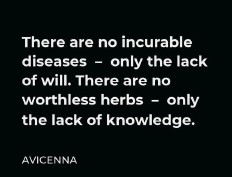
https://br.pinterest.com/pin/770326711284710280/
Avicenna’s saying implies that
- most diseases cannot be cured.
- all herbs have valuable qualities.
- it is needless to learn more about plants.
- herbal medicine is much used everywhere.
- some plants may be harmful to one’s health.
Mostrar resposta e comentário
Gabarito
B
Comentário do professor
Todas as ervas têm qualidades valiosas porque a frase de Avicena estabelece uma afirmação generalizada sobre as plantas: ela não aponta para exemplos isolados, mas para uma característica comum a cada erva.
Ao inferir que cada planta possui algum benefício, o enunciado funciona como uma generalização universal. Em termos lógicos, é uma declaração do tipo "para todo x, se x é erva, então x tem valor".
Na prática, isso significa que Avicena reconhece propriedades medicinais ou utilitárias em todas as ervas, mesmo que a natureza e a intensidade dessas qualidades variem.
Portanto, a alternativa correta sintetiza a conclusão direta do enunciado: há valor intrínseco em cada erva, segundo a afirmação apresentada.
Conteúdo do catálogo FC Concursos · Atualizado em