
Questão FC699820
Read the excerpt from Harmer, and answer the question below. No one who speaks English has any difficulty understanding the meaning of a sentence like ‘It’s warm in here’. We all r
Semântica e Significado de Vocábulos (Semantics)
VUNESP · 2025
Read the excerpt from Harmer, and answer the question below.
No one who speaks English has any difficulty understanding the meaning of a sentence like ‘It’s warm in here’. We all recognize that it is a comment on the temperature in some place or other. But why it is being said, and what the speaker wishes to convey by saying it, depends entirely on two things: the context in which it is said and what the speaker wants people to understand. Suppose, for example, that the words are spoken by someone who is either lazy, ill or in some position of power. ‘It’s warm in here’ might then be either a request or an order for someone to open a window. If, however, two people come in out of the cold, ‘It’s warm in here’ might well be an expression of satisfaction or pleasure. In each case, the sentence is performing a different language function, e.g. requesting, suggesting, etc.
(HARMER, Jeremy. How to teach English. Adaptado)
Read the comic.
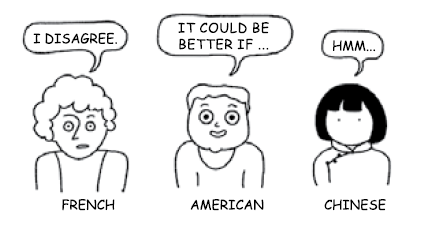
(https://www.boredpanda.com/comics-chinese-western-culturecomparison- part-2-tinyeyescomics)
It allows us to see different cultural representations of
- agreeing and disagreeing.
- stating facts and opinions.
- comparing and contrasting.
- justifying opinions.
- giving reasons.
Mostrar resposta e comentário
Gabarito
A
Comentário do professor
O excerto de Harmer mostra que uma mesma frase pode assumir diferentes funções comunicativas dependendo do contexto e da intenção do falante.
A tirinha explora exatamente isso ao mostrar respostas distintas a uma opinião, revelando variações culturais na maneira de concordar e discordar.
No exemplo visual, um personagem reage de forma direta, outro suaviza a discordância com uma proposta e outro evita confronto com silêncio ou interjeição.
Essas respostas ilustram estratégias comunicativas culturais: direto, mitigado e evasivo, todas relacionadas à manifestação de concordância/discordância.
Assim, a alternativa correta indica com precisão o foco da tirinha: representar diferentes modos culturais de expressar concordância e discordância.
Conteúdo do catálogo FC Concursos · Atualizado em