
Questão FC700017
Leia o texto a seguir para responder a questão: Folklore and fairytales have been examined as effective means for teaching culture in a foreign language because they are an integra
Sem classificação
VUNESP · 2026
Leia o texto a seguir para responder a questão:
Folklore and fairytales have been examined as effective means for teaching culture in a foreign language because they are an integral part of people’s everyday life. Morain (1997) proposed the idea that folklore is superior to literary writing because it depicts the attitudes of large groups of people. Gholson and Stumpf (2005) believe that folklore might help promote cultural dialogue in which L2 learners gain respect for differences between their native culture and L2 culture, as well as acknowledge the similarities in both cultures. Akpinar and Ozturk (2009) suggest that folklore can be taught in an L2 classroom through an inquiry approach: folklore engages the students in exploring the theme and structure of a folktale, relating these to their L1 background knowledge, and then drawing conclusions about the target culture, its beliefs, values, lifestyles, history, etc.
(DEMA, O., MUELLER, A. J. Teaching culture in the 21st
century language classroom. IN: SILDUS, T. (ed.). Published in Touch the World: Selected Papers from the 2012
Central States Conference on the Teaching of Foreign Languages. Eau Claire: Crown Prints, pp. 75-91. Adaptado)
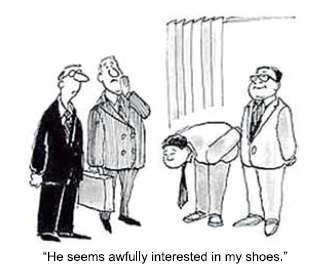
Leia as duas charges a seguir para responder a questão:

(https://culturalconflict.wordpress.com/)
(https://archive.shine.cn/)
In the context of the two cartoons, the utterances “He seems awfully interested in my shoes” and “He seems a bit unfriendly”, reveal
- cultural stereotyping.
- cultural discrimination.
- language insensivity.
- intercultural intolerance.
- cultural unawareness.
Mostrar resposta e comentário
Gabarito
Errado
Comentário do professor
Os enunciados mostram desconhecimento cultural, pois os falantes interpretam comportamentos observados segundo normas próprias, sem considerar outras possibilidades culturais.
No primeiro cartoon, concluir que alguém “se interessa pelos meus sapatos” ignora que o olhar pode indicar respeito, reconhecimento de um símbolo cultural, curiosidade por um estilo diferente ou até um gesto ritual. A leitura imediata é etnocêntrica e reducionista.
No segundo, rotular alguém de “um pouco antipático” por falta de sorriso demonstra desconhecer as regras de exibição emocional que variam entre culturas; o comportamento pode ser sinal de formalidade, timidez ou reserva social.
Em suma, as falas expõem interpretações automáticas e julgamentos baseados em normas próprias, evidenciando a necessidade de competência intercultural para evitar conclusões precipitadas.
Conteúdo do catálogo FC Concursos · Atualizado em